Australia’s Therapeutic Goods Administration published the new TGO 115 and TGO 116 medicine-labelling standards on 29 September 2026. The standards replaced TGO 91 and TGO 92 from 1 October 2026 and include a five-year transition period. For medicine sponsors, contract manufacturers and pharmaceutical packaging teams, this creates a managed label-review and production-planning programme rather than a single-day relabelling event.
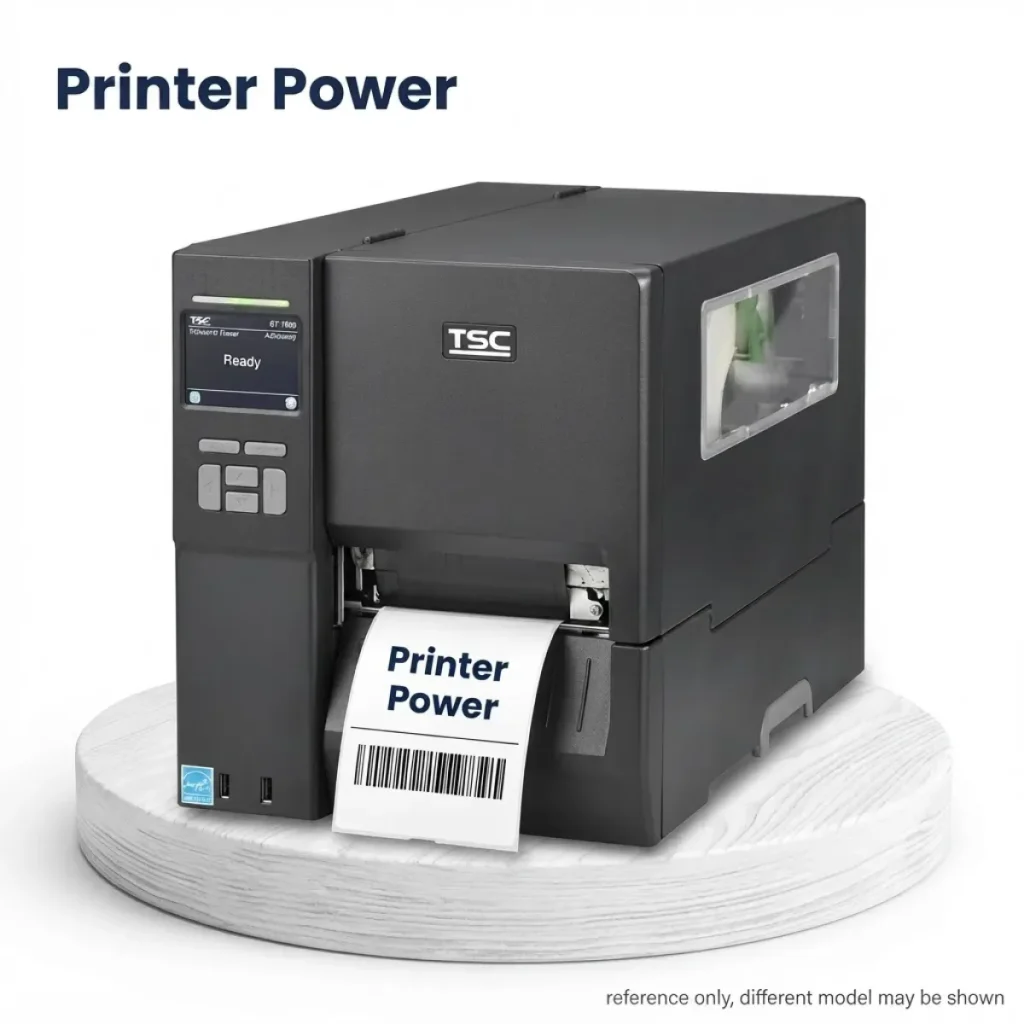
The TSC MH241T Series is a supporting industrial thermal-transfer printer range for organisations reviewing label-production workflows. The selected configuration, SKU MH341T-A001-0404, has 300dpi resolution, thermal transfer printing, USB, Ethernet and Bluetooth connectivity, and no cutter or peeler option. It is one example of how a thermal-transfer workflow can support controlled production of variable information on labels where that method and configuration suit the operation.
TGO 115 — Prescription Medicines (Replaces TGO 91)
-
Serialization & GS1 DataMatrix Integration: Clearer rules and explicit exemptions for integrating 2D DataMatrix barcodes, machine-readable serial numbers, and GTIN layouts without breaching font height or visual clearance zone constraints.
-
Small Container & Blister Exemptions: Refined layout options for small primary containers (e.g., ampoules, vials, small pre-filled syringes) to reduce text density while retaining core safety identifiers (Active Ingredient, Strength, Batch, Expiry, ARTG number).
-
Section 14 Consent Relief: Codifies common alternative labeling practices that previously required formal Section 14 exemption applications (e.g., minor layout adjustments, bilingual international packaging elements, or alternative presentation of excipients).
-
Active Ingredient Prominence: Maintains strict visual hierarchy rules (active ingredient name size relative to trade name) while clarifying rules for complex chemical salts and biological descriptors.
TGO 116 — Non-Prescription & OTC / Complementary Medicines (Replaces TGO 92)
-
Medicine Information Panel (MIP) Formatting: Refined layout guidelines for the back/side panel (the standard “Medicine Information Panel”) on over-the-counter (OTC) and complementary medicines to improve legibility, line spacing, and contrast.
-
Small Pack Size Rules: Streamlined requirements for small-pack OTC items (e.g., blister foils, lip balms, small tins) where space constraints make standard Medicine Information Panels impractical.
-
Allergen & Excipient Standardisation: Updated mandatory allergen warnings (e.g., gluten, tree nuts, sulfites, benzoates) to align with current TGA Approved Names (TAB) and global safety warning phrasing.
-
Digital Links & QR Codes: Explicit guidelines on adding QR codes or URLs linking directly to digital Product Information (PI), Consumer Medicine Information (CMI), or user dosage guides without obscuring mandatory statutory warnings.
Why the standards transition is a label-production workflow
A medicine-label transition reaches beyond revising artwork files. Packaging teams may need to identify affected SKUs, review approved artwork, map variable information such as batch or date fields, arrange proofing, control version release and plan the point at which revised labels enter production. The five-year transition window provides time to sequence this work, but it also makes version control important while existing and revised label programmes are managed.
For Australian medicine suppliers, the practical objective is a repeatable workflow that connects approved label content to the correct product and production run. That workflow should distinguish preprinted information from variable data, define who approves artwork and print changes, and retain clear controls over which label version is released for use.
Operational requirements to define before printing
Build an SKU and artwork register
Start with a register of medicine SKUs and their current label artwork. For each item, identify the artwork version, label format, variable-data fields, approval status and intended changeover point. This gives packaging, quality and production teams a common record for scheduling revisions across the transition programme.
Assess legibility, data density and proofing needs
Label production should be planned around the amount and type of information that must appear in the available label area. Small text, fine graphics and dense two-dimensional codes can increase the need for print clarity. Proofing should verify that the approved design, variable fields and intended barcode content are represented correctly before a production release.
Ordinary barcode scanning is not the same as barcode verification. Verification assesses whether a barcode symbol conforms to its relevant specification and can reveal issues such as poor contrast or print-quality weaknesses before labels enter circulation. Where a trading-partner or internal process requires verified barcode quality, that requirement should be incorporated into the label-control workflow.
Choose the label and ribbon as a matched production system
Thermal-transfer printing forms an image by heating an ink-coated ribbon and transferring the ink to the label surface. It allows the label face stock and ribbon to be selected around the expected handling and storage conditions. Wax ribbons are commonly used for economical paper-label applications, wax-resin can offer greater rub resistance across a wider range of stocks, and resin is commonly considered for suitable synthetic labels facing tougher handling or exposure.
The relevant decision is the finished label’s required performance, not the appearance of an unprinted roll. Media construction, adhesive choice, label surface, ribbon grade and the conditions faced by the packed medicine should therefore be considered together as part of the controlled label specification.
Plan registration and version changeovers
Label registration affects whether print lands in the correct position. Gap sensing uses the physical space between labels, while black-mark sensing uses a printed reference mark. Matching label construction with the intended registration approach helps avoid drifting print position, skipped labels and incorrect label-length detection. Transparent or unusually shaped labels may particularly require black-mark registration.
During a label-standard transition, changeover controls also matter. Teams can define how superseded stock is identified, how approved files are released, and how variable-data templates are linked to the correct artwork version. These are workflow decisions rather than printer settings, but they determine whether label output remains controlled across multiple products and production runs.
Where industrial thermal-transfer printing fits
Industrial printers can support high-volume label workflows in warehouse, logistics, manufacturing and shipping environments. Official TSC documentation describes the MH Series as an industrial barcode label printer family with multiple resolutions, premium printhead technology, a fast processor and memory capacity for high-quality label output.
For medicine-label workflows, the selected MH341T-A001-0404 configuration provides 300dpi output for sharp text, fine graphics and denser two-dimensional barcodes. Its thermal-transfer method is relevant where a durable printed image is required and where a ribbon-and-label combination is selected for the operational conditions. USB and Ethernet support direct and wired-network connection needs, while Bluetooth provides an additional wireless connection option for this specific selected configuration.
The MH241T Series also supports top and bottom black-mark media, with selectable media-sensor settings on the display menu. This capability can be relevant when the approved label format relies on black-mark registration. The series includes a 4.3-inch touch LCD interface, and TSC Sense Care provides printhead-health monitoring intended to help identify potential printhead issues before they disrupt output.
Implementation decisions for Australian medicine packaging teams
Printer Power can help organisations select a labelling workflow that aligns with their approved artwork, data requirements and production environment. The decision should begin with the label programme rather than with a printer model.
- Resolution: assess whether label content needs the sharper text, fine graphics or denser code capability associated with 300dpi printing, or whether another resolution is appropriate for the approved format.
- Print method: determine whether thermal transfer is suitable for the required image durability and the selected label-and-ribbon combination.
- Connectivity: map printer connectivity to the controlled source of approved print data, whether production is locally connected, networked or requires the selected model’s Bluetooth option.
- Media format: define label dimensions, registration method and whether the workflow needs standard roll-fed output or a post-print handling option.
- Output control: establish artwork approval, template release, proofing and changeover records before revised labels are introduced.
Fit limitations and configuration choices
SKU MH341T-A001-0404 is a standard configuration without a cutter or peeler. It suits general roll-fed printing tasks, but it is not the appropriate selection where automatic cutting or peel-and-present handling is an operational requirement. The MH Series range includes configurations with different resolutions and post-print handling options, so the selected format should match the approved label workflow rather than be treated as interchangeable.
The selected 300dpi model is not the series’ highest-resolution option. TSC also offers 600dpi MH Series configurations for very small two-dimensional barcodes, fine print and ultra-high-resolution images. Conversely, the series includes 203dpi configurations for standard shipping, carton and pallet identification workflows. Medicine-label teams should assess the actual label design, code density and production purpose before choosing a resolution.
The TGO 115 and TGO 116 transition is a programme for controlled planning of medicine-label changes. A suitable print workflow combines approved content, fit-for-purpose label materials, reliable registration and clear release controls, with the printer chosen to support those defined requirements.
Find the Right Product
Contact us to discuss a controlled medicine-label printing workflow for your Australian transition programme.