Australia’s packaged alcohol sector has a defined labelling change to prepare for: most packaged alcoholic beverages will require a prescribed energy statement from 13 August 2028. FSANZ released implementation guidance and an online calculator on 4 February 2026, giving manufacturers, importers, co-packers and label-artwork teams a practical planning window before the commencement date.
The work is broader than adding a single line to a label. An energy statement requires coordinated product data, approved pack artwork, management of existing packaging stock and controlled production changeovers. Printer Power can help Australian businesses consider a suitable printing workflow for the identification, logistics and production-control labels that support this transition.
Why alcohol energy-statement readiness is a workflow issue
Energy-labelling readiness begins with dependable product information and ends with the correct pack moving through production and distribution. The implementation guidance identifies energy per serving and per 100 mL, servings per package, serving size and standard drinks per serving as information manufacturers and importers need to prepare for the new statement.
That creates several linked operational activities: calculate and retain the relevant data, apply it to approved artwork, manage the run-out of existing packaging, distinguish revised packs from earlier stock, and maintain consistent identification through packing, warehousing and dispatch. Where multiple products, pack sizes or artwork versions are handled, print-on-demand identification labels can help teams associate a physical item, carton, pallet or location with data such as an item identifier, batch or serial number.
For operational labels, barcode content and human-readable information serve different purposes. A barcode can support scanning events such as receiving, packing, picking and shipping, while clear text gives staff a visual reference during checks and handovers. This distinction is useful when a compliance-driven packaging change needs to be traceable beyond the artwork approval stage.
Operational requirements for a controlled changeover
Keep product data and approved artwork aligned
Businesses need a controlled way to ensure that calculated energy information reaches the correct approved pack format. This is especially important where serving size, package volume or product formulation differ across SKUs. A practical workflow separates the approval of pack artwork from the operational labels used to identify production lots, cartons and palletised stock, while keeping the relevant product and version identifiers consistent across both.
Plan packaging-stock transitions
Existing stock run-out and new-pack introduction need clear identification points. Production and warehouse teams may need to distinguish old and revised packaging during manufacture, staging and dispatch. Batch, carton and pallet labels can provide a print-on-demand record that supports those handovers without changing the primary consumer-facing pack label each time an operational detail changes.
Match label durability to the environment
Operational identification labels should be selected for their required life and exposure. Thermal-transfer printing forms an image by transferring a ribbon coating onto the label surface, making it a common option where sharp text, graphics or barcodes need greater durability. The face stock, adhesive, ribbon chemistry and expected exposure should be considered together, because resistance to rubbing, fluids, heat or UV depends on the tested media-and-ribbon combination.
Define repeatable print controls
Reliable label placement depends on media registration. Gap, notch and black-mark materials use different cues to establish the start of each label. A controlled workflow should use media with an appropriate registration cue and verify that printed content is consistently positioned and scannable. Print energy is also a balance: the objective is the lowest setting that produces reliable, legible output with the selected supplies rather than simply using more heat.
How industrial thermal-transfer printing can support the transition
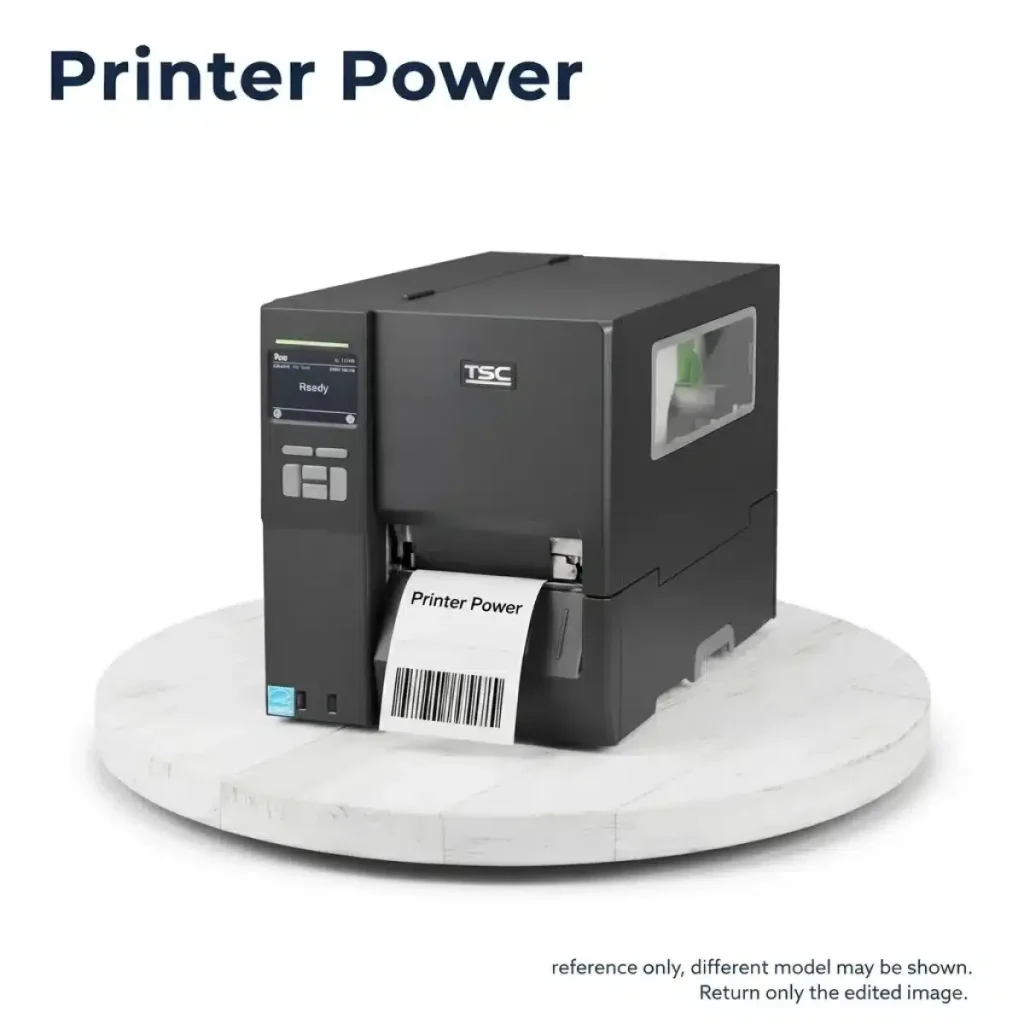
Industrial thermal-transfer printers are relevant to the secondary-packaging and production-identification part of an alcohol energy-labelling changeover. They can support on-demand labels for cartons, cases, pallets, work-in-progress and internal locations where durable identification and scan-ready barcodes are needed through handling and distribution.
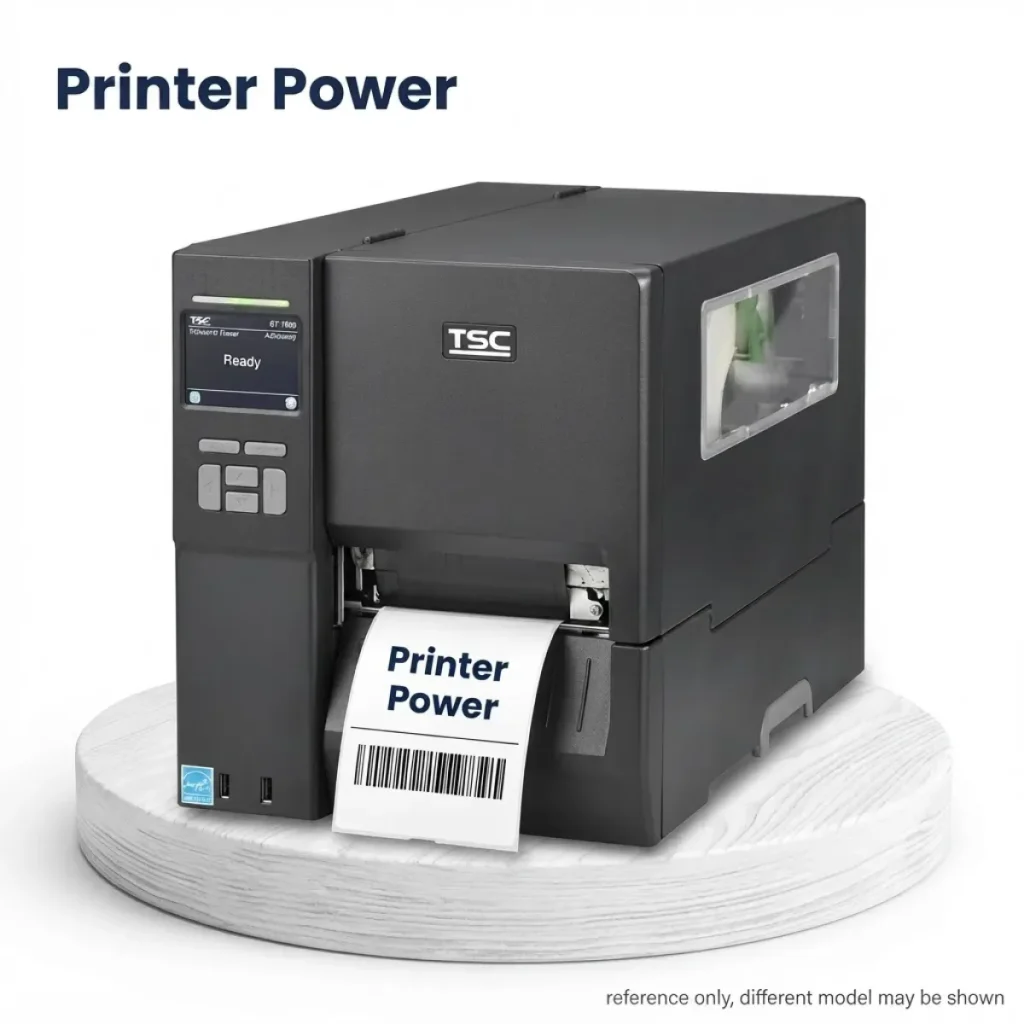
The TSC MH241T Series is one supporting example for demanding warehouse, logistics, manufacturing and shipping environments. Official manufacturer documentation identifies the MH Series as an industrial barcode-label printer family with multiple resolutions, a colour touch display, premium printhead technology, a fast processor and memory capacity intended for high-quality industrial printing. The series supports top and bottom black-mark media, allowing workflows that use pre-printed black marks as registration references.
For teams that need detailed operational labels, the selected MH241T Series variation is SKU MH341T-A001-0404. This configuration uses thermal-transfer printing at 300 dpi and provides USB, Ethernet and Bluetooth connectivity, with no cutter or peeler option. Its 300 dpi output is suited to sharp text, fine graphics and dense 2D barcodes on compact product-identification or compliance-support labels. USB and Ethernet can suit direct workstation and wired-network workflows, while Bluetooth provides an additional wireless connection option.
The MH341T model sits within the MH Series 4-inch industrial range. Its 4.3-inch touch LCD interface, 256 MB DRAM and 512 MB Flash are documented for the MH341T configuration, and the series includes printhead health monitoring. These capabilities are relevant where operational teams need to manage recurring label jobs across busy production, warehouse and dispatch environments.
Fit limits and selection decisions
The MH241T Series should be evaluated as an industrial thermal-transfer solution for operational identification, not assumed to be the answer for every element of an alcohol packaging change. The cited configuration has no cutter or peeler, so it suits general roll-fed printing rather than workflows that specifically require either of those post-print functions.
It is also important to separate primary consumer-pack artwork from secondary and internal identification labels. The energy statement must be incorporated into the applicable packaged-alcohol label workflow, while thermal-transfer printing may be better aligned with carton, case, pallet, batch and location identification. Businesses needing short-run colour artwork transitions or consumer-facing colour labels should assess a workflow designed for that distinct purpose.
Resolution is another decision point. The selected 300 dpi configuration is appropriate where fine text and denser 2D barcodes are needed. The MH Series also includes 203 dpi and 600 dpi configurations: official manufacturer documentation positions 600 dpi for very small 2D barcodes, graphics and fine print. Selection should follow the label’s required information density, physical size, expected handling and connection environment rather than resolution alone.
Preparing before 13 August 2028
A practical preparation programme can map each alcoholic beverage and pack format to its energy data, approved artwork status, packaging-stock plan and operational identification needs. It can then define which labels are consumer-facing packaging, which are production-control labels and which are logistics labels. This makes it easier to introduce revised packs in a controlled manner while preserving traceability through production and distribution.
Printer Power can help businesses choose an appropriate labelling workflow around these requirements, including industrial thermal-transfer options such as the MH241T Series where durable, on-demand operational labels are a fit. Contact our team to discuss the label workflow, information density and production environment relevant to your transition plan.
Find the Right Product
Contact our team to discuss a controlled alcohol-label changeover workflow and suitable industrial identification-label printing options.